
The Benefits of Reformer Pilates: Strength, Flexibility, and Mind-Body Balance
Updated: Jan 23
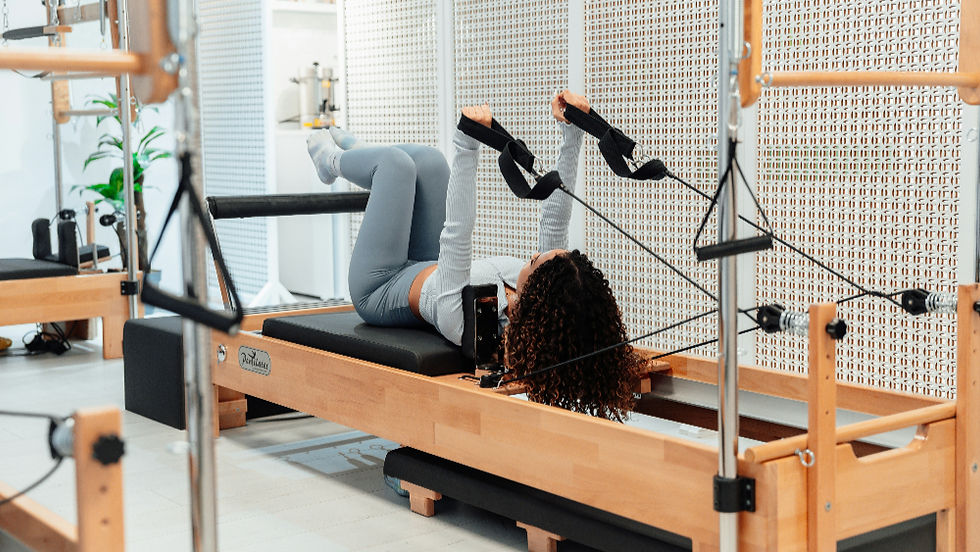
If you're looking for a low-impact, full-body workout that strengthens, tones, and improves flexibility, Reformer Pilates could be the perfect addition to your fitness routine. This innovative practice uses a specialised machine known as the Reformer to introduce resistance to traditional Pilates exercises, creating a uniquely effective workout that challenges both body and mind. Whether you're new to Pilates or deepening your wellness practice, Reformer Pilates offers a comprehensive range of benefits supporting strength, balance, posture, flexibility, and mental clarity.
What distinguishes Reformer Pilates from other exercise modalities is its sophisticated approach to movement and resistance. The Reformer machine provides adjustable resistance through springs and pulleys, allowing precise control over the intensity and direction of each movement. This versatility makes Reformer Pilates accessible to complete beginners whilst offering sufficient challenge for advanced practitioners and athletes. The practice emphasises quality of movement over quantity of repetitions, creating lasting changes in strength, flexibility, and body awareness that extend far beyond the studio.
At The Wellness Holiday Boutique, we believe Reformer Pilates can be a powerful way to elevate both physical and mental wellbeing. The practice aligns perfectly with the principles of holistic wellness we champion - addressing the body as an integrated system whilst cultivating mindfulness and presence. Below, we explore the comprehensive benefits of incorporating this transformative practice into your fitness regime.
Understanding the Reformer: Innovation in Movement
Before exploring specific benefits, understanding the Reformer machine itself provides valuable context. Developed by Joseph Pilates in the early 20th century, the Reformer was originally called the "Universal Reformer" because of its ability to "reform" the body. Joseph Pilates, a German physical trainer, developed his method whilst interned during World War I, initially using bed springs and other improvised equipment to help rehabilitate injured soldiers. This origin explains the Reformer's emphasis on rehabilitation, controlled movement, and gentle resistance.
The modern Reformer consists of a sliding carriage mounted on a frame with adjustable springs providing variable resistance. The carriage moves back and forth on wheels, with the springs creating resistance as you push or pull. Straps with handles attach to the springs, allowing arm and leg work. A footbar at one end provides a pushing surface, whilst shoulder blocks prevent sliding off during certain exercises. The adjustable components allow infinite modification, making exercises easier or more challenging based on spring tension, body position, and movement complexity.
What makes the Reformer particularly effective is its ability to provide resistance in multiple planes of motion whilst simultaneously supporting the body. Unlike gravity-dependent exercises where you're limited to working against your body weight in vertical planes, the Reformer allows horizontal, diagonal, and rotational movement patterns. This three-dimensional approach creates functional strength transferring directly to daily activities and sports performance. The sliding carriage also provides instant feedback about control and stability - if you're not engaging the right muscles or maintaining proper alignment, the carriage won't move smoothly.
Benefit One: Improves Posture and Core Strength
One of the most significant and immediately noticeable benefits of Reformer Pilates is its profound effect on posture and core strength. The core - comprising not just the abdominal muscles but the entire cylinder of muscles surrounding the spine including the diaphragm, pelvic floor, deep abdominals, and back muscles - forms the foundation for all movement. Modern sedentary lifestyles create widespread core weakness and postural imbalances, contributing to back pain, reduced mobility, and compromised physical function.
Reformer Pilates addresses core weakness through constant, varied engagement. Unlike isolated abdominal exercises that work only the superficial six-pack muscles, Reformer work targets the deep stabilising muscles including the transverse abdominis, multifidus, and pelvic floor. These muscles function like an internal corset, supporting the spine and creating a stable foundation from which the limbs can move. Every exercise on the Reformer requires core engagement to maintain stability against the resistance and to control the moving carriage, making core strengthening an inherent component of the practice rather than a separate focus.
The Reformer's design particularly challenges core stability through its unstable surface. The sliding carriage beneath you demands constant stabilisation, forcing the deep core muscles to fire continuously to maintain position. This dynamic stability work proves far more functional than static core exercises because it mimics real-world demands where the core must stabilise whilst the body moves. Whether you're pushing the carriage with your legs, pulling the straps with your arms, or balancing on the moving surface, your core must work constantly to maintain proper alignment and control.
The postural improvements from consistent Reformer practice extend throughout daily life. Strong core muscles hold the spine in optimal alignment, reducing the strain on passive structures like ligaments and discs. This improved alignment alleviates chronic back pain, reduces neck and shoulder tension, and prevents the progressive postural decline that often accompanies ageing. Many practitioners notice they stand taller, sit more comfortably for longer periods, and move with greater ease after several weeks of regular practice. The body awareness developed through Reformer work also helps you recognise and correct poor postural habits throughout the day.
Benefit Two: Full-Body Toning and Sculpting
Reformer Pilates excels at creating long, lean, toned muscles throughout the entire body without building excessive bulk. This aesthetic outcome results from the practice's unique combination of resistance training, eccentric muscle lengthening, and emphasis on multiple muscle groups working simultaneously. Unlike traditional weight training that often isolates specific muscles through repetitive movements, Reformer work integrates muscle groups in functional patterns whilst maintaining constant tension throughout the full range of motion.
The Reformer's spring resistance creates a particular type of muscular challenge. Unlike weights that provide consistent resistance throughout a movement, springs increase resistance as they stretch. This variable resistance means muscles must work throughout the entire range of motion, with increasing challenge at the end ranges where many weight-based exercises become easier. Additionally, both the concentric phase, where muscles shorten, and eccentric phase, where muscles lengthen, require active control against resistance, creating comprehensive muscular development.
The practice particularly excels at toning the arms, shoulders, and upper back - areas that mat Pilates struggles to effectively challenge. The Reformer's straps and springs allow targeted upper body work that builds defined shoulders, toned arms, and a strong, sculpted upper back. Meanwhile, the footwork series and various leg exercises tone the thighs, calves, and glutes, whilst the constant core engagement sculpts the abdominal muscles. Because exercises engage multiple muscle groups simultaneously, you develop balanced, proportional strength rather than the muscular imbalances that can result from machine-based weight training.
The emphasis on eccentric lengthening creates the characteristic long, lean muscle development associated with Pilates. Many exercises involve lengthening the muscle whilst it works against resistance - for instance, slowly returning the carriage whilst maintaining control, or extending the limbs against spring tension. This eccentric work increases muscle fibre length whilst building strength, creating toned definition without the shortened, bulky appearance that can result from only concentric training. The combination of strength and length creates the elegant, dancer-like physique many practitioners develop, characterised by lean muscle definition rather than excessive bulk.
Benefit Three: Enhances Flexibility and Mobility
The Reformer's unique capacity to enhance flexibility and mobility whilst simultaneously building strength distinguishes it from both traditional stretching and strength training. Many exercise modalities create a trade-off between flexibility and strength - stretching programmes improve flexibility but don't build strength, whilst strength training often reduces flexibility by building shortened, tightened muscles. Reformer Pilates integrates flexibility and strength development, creating mobile strength that enhances functional capacity.
The Reformer facilitates greater range of motion than mat-based Pilates through its sliding carriage and adjustable springs. Many exercises involve moving through exaggerated ranges of motion whilst controlling the resistance, simultaneously lengthening tight muscles and strengthening the newly accessed ranges. This approach, called active flexibility or dynamic flexibility, proves more functional than passive stretching because it develops strength throughout the full movement range. Rather than just lengthening muscles, you're teaching them to control and support extended positions.
The practice particularly benefits chronically tight areas including the hip flexors, hamstrings, shoulders, and spine. Modern sitting-dominant lifestyles create characteristic tightness patterns, with shortened hip flexors from prolonged sitting, tight hamstrings from lack of movement, restricted shoulders from keyboard work, and reduced spinal mobility from static postures. Reformer exercises methodically address these restrictions through controlled movements that gently challenge tight tissues whilst building the strength needed to maintain improved mobility.
Improved mobility from Reformer practice enhances daily function and reduces injury risk. Better hip mobility improves walking gait and reduces strain on the lower back and knees. Enhanced shoulder mobility allows reaching overhead comfortably and reduces neck tension. Increased spinal mobility maintains the fluid, youthful movement quality that naturally declines with age and sedentary living. The combination of strength and flexibility creates robust, resilient joints that move efficiently and withstand the demands of daily life and athletic pursuits.
Benefit Four: Low-Impact, High-Effect Workout
One of Reformer Pilates' most valuable characteristics is its ability to deliver highly effective results whilst remaining gentle on joints and connective tissues. This low-impact nature makes the practice accessible to populations often excluded from other exercise modalities including those recovering from injury, individuals with arthritis or joint problems, older adults, pregnant women, and anyone seeking alternatives to high-impact exercise that pounds joints and risks injury.
The Reformer's design inherently reduces impact through its supportive surface and controlled resistance. Unlike running, jumping, or many gym exercises that involve impact forces, Reformer work occurs on the sliding carriage that absorbs and distributes forces smoothly. The spring resistance provides gradual, controlled challenge without sudden loading or jarring movements. This gentle approach allows building significant strength, endurance, and fitness without the joint stress that often leads to overuse injuries in other training methods.
The practice particularly benefits those recovering from injury or managing chronic conditions. Physical therapists and rehabilitation specialists increasingly incorporate Reformer Pilates into treatment protocols because it allows safe, progressive loading of healing tissues. The adjustable resistance, supportive environment, and emphasis on proper alignment create ideal conditions for rebuilding strength and function after injury without risking re-injury. Many people discover Reformer Pilates through rehabilitation and continue practising for ongoing wellness and injury prevention.
For older adults, the low-impact nature combined with significant strengthening and balance benefits makes Reformer Pilates an ideal exercise choice. The practice builds the muscle strength, bone density, balance, and functional capacity crucial for maintaining independence whilst avoiding the fall risk and joint stress of more intense exercise. The supportive environment of the Reformer allows safe progression, with exercises easily modified to accommodate limitations whilst still providing effective challenge.
Benefit Five: Improves Balance and Stability
Reformer Pilates systematically develops balance and stability through constant challenge to the body's stabilising systems. Balance and stability, whilst often used interchangeably, represent slightly different capacities - balance refers to maintaining equilibrium and not falling, whilst stability refers to controlling position against disturbance. Both capacities decline with age and sedentary living, contributing to increased fall risk, reduced athletic performance, and compromised daily function.
The unstable surface of the moving carriage creates constant balance and stability demands. Unlike stable ground, the carriage moves beneath you, requiring continuous micro-adjustments to maintain position. These small stabilising actions engage the deep postural muscles, proprioceptors, and neuromuscular coordination systems responsible for balance. The practice systematically challenges balance in multiple positions - standing, kneeling, on hands and knees, side-lying - developing comprehensive stability capacity applicable to any situation.
The practice particularly develops the crucial stabiliser muscles often neglected in traditional training. These small, deep muscles surrounding joints provide fine motor control and proprioceptive feedback essential for balance and coordinated movement. Unlike the large, powerful prime mover muscles targeted by most exercise, stabilisers require specific training through unstable environments and controlled movement. The Reformer provides ideal conditions for stabiliser development, creating the neuromuscular integration necessary for optimal balance and injury-free movement.
Improved balance and stability enhance athletic performance across all sports. Better stability allows generating more force from a solid foundation, whether throwing, jumping, or changing direction. Enhanced proprioception - the awareness of body position in space - improves movement efficiency and reduces injury risk. The core stability developed through Reformer practice creates the solid platform from which limbs can move powerfully and precisely.
Benefit Six: Boosts Mental Clarity and Focus
Reformer Pilates provides significant mental and cognitive benefits extending far beyond the physical improvements typically associated with exercise. The practice demands intense concentration, precise body awareness, and coordination of breath with movement, creating a moving meditation that quiets mental chatter whilst sharpening focus. In our distraction-saturated world where attention fragmentation has become normalised, the sustained focus required by Reformer work provides valuable cognitive training.
Each Reformer exercise requires multi-tasking attention across numerous elements simultaneously. You must maintain proper alignment, engage specific muscles whilst relaxing others, control the carriage movement, coordinate breath with motion, and often count repetitions or maintain tempo. This complex attentional demand fully occupies the conscious mind, preventing the rumination and worry that often dominate mental activity. Many practitioners describe a meditative state during Reformer work where external concerns fade and complete presence in the current moment emerges.
The mind-body integration central to Pilates philosophy creates profound stress reduction benefits. Joseph Pilates emphasised mental control of physical movement, viewing exercise as training for both body and mind. This integration requires conscious direction of attention throughout the workout, preventing the mental disengagement possible in more repetitive exercise. The focus on breath further enhances stress reduction by activating parasympathetic nervous system responses, creating feelings of calm and balance that extend well beyond the studio.
Benefit Seven: Supports Weight Management and Metabolic Health
Whilst Reformer Pilates is not typically considered cardiovascular exercise, the practice provides significant support for weight management and metabolic health through multiple mechanisms. The sustained muscular work increases energy expenditure during sessions, the muscle building raises resting metabolic rate, and the functional improvements support increased daily activity levels. These combined effects create favourable conditions for achieving and maintaining healthy weight.
The muscular work during Reformer sessions burns substantial calories despite the low-impact nature. A typical Reformer class maintains elevated heart rate through continuous movement and resistance challenge, with energy expenditure comparable to moderate-intensity activities like brisk walking or cycling. The variable resistance of the springs and the full-body nature of the work create sustained metabolic demand throughout the session.
The muscle building resulting from consistent Reformer practice increases resting metabolic rate - the calories burned at rest. Muscle tissue is metabolically active, requiring energy for maintenance even when not exercising. Building lean muscle through Reformer work increases daily energy expenditure, making weight management easier without requiring constant caloric restriction or excessive exercise. This metabolic benefit continues long after each session ends, creating sustainable support for healthy weight.
The body composition changes from Reformer practice prove more valuable than simple weight loss. The practice builds lean muscle whilst reducing body fat, creating a toned, defined physique even if scale weight doesn't change dramatically. Muscle is denser than fat, so body composition improvements often manifest as reduced measurements, better-fitting clothes, and improved body shape even without significant weight loss.
Benefit Eight: Suitable for All Fitness Levels
Perhaps the most remarkable aspect of Reformer Pilates is its complete adaptability to all fitness levels, from absolute beginners to elite athletes. The adjustable resistance, infinite exercise modifications, and scalable complexity allow every individual to work at appropriate intensity whilst being challenged optimally. This universality makes Reformer studios accessible communities where diverse populations exercise side by side, each receiving appropriate challenge and benefit.
For complete beginners, the Reformer provides supportive introduction to mind-body exercise. The machine's structure offers stability and assistance, making certain movements more accessible than on the mat. The spring resistance can be set very light, allowing learning proper form without excessive challenge. Instructors can modify exercises extensively, breaking complex movements into manageable components.
For those recovering from injury or managing chronic conditions, the Reformer allows safe, progressive rehabilitation. The supportive environment, adjustable resistance, and controlled movement patterns create ideal conditions for rebuilding strength and function. The full-body nature of the work prevents the compensatory patterns and imbalances that often develop during rehabilitation when injured areas are avoided.
For experienced practitioners and athletes, the Reformer provides endless challenge through advanced exercises, increased resistance, unstable positions, and complex movement combinations. Elite athletes use Reformer work for injury prevention, performance enhancement, and recovery. The practice addresses weaknesses and imbalances that sport-specific training often creates, building comprehensive functional capacity.
Let Us Help You Plan Your Reformer Pilates Retreat
We're here to help you choose the perfect Reformer Pilates retreat for your fitness goals and wellness aspirations. Whether you're new to Reformer work or experienced practitioner, whether you seek gentle introduction or intensive challenge, we'll guide you to the retreat that feels right for you.